
Vestibular Physiotherapy for Dizziness, Vertigo & Balance in Sherwood Park
Feel steadier. Move with more confidence.

Room spinning when you roll over in bed? Feeling off-balance when you walk, turn your head, or enter a busy store?
Dizziness can make everyday life feel unpredictable. At Strong Body, we take time to understand your symptoms, assess what may be contributing, and explain your next steps.
Not sure where to start? Call 587-451-0608
Advanced vestibular training • Infrared video goggles when indicated • Individualized care
Does any of this sound familiar?
The room spins when you lie down, roll over, or look up.
Turning your head makes you feel dizzy or unsettled.
Grocery aisles, crowds, or scrolling on your phone feel overwhelming.
Your vision feels blurry or shaky when you move.
You feel unsteady, pulled to one side, or less confident walking.
Dizziness is affecting your work, exercise, or everyday activities.
You do not need to know the name of your condition before reaching out. Some people describe spinning. Others feel floating, swaying, disoriented, or simply “not right.”
Because dizziness has different causes, understanding your symptoms comes before choosing treatment.
A thorough assessment. An explanation you can understand.
Your appointment starts with your story: when your symptoms began, what brings them on, and what you want to get back to doing. Depending on your symptoms, your assessment may include:
Positional testing for BPPV.
Eye movement and gaze stability testing.
Balance and walking assessment.
Assessment of sensitivity to movement.
Neck assessment when relevant.
We use infrared video goggles when indicated to observe eye movements that can provide important clues about vestibular function.
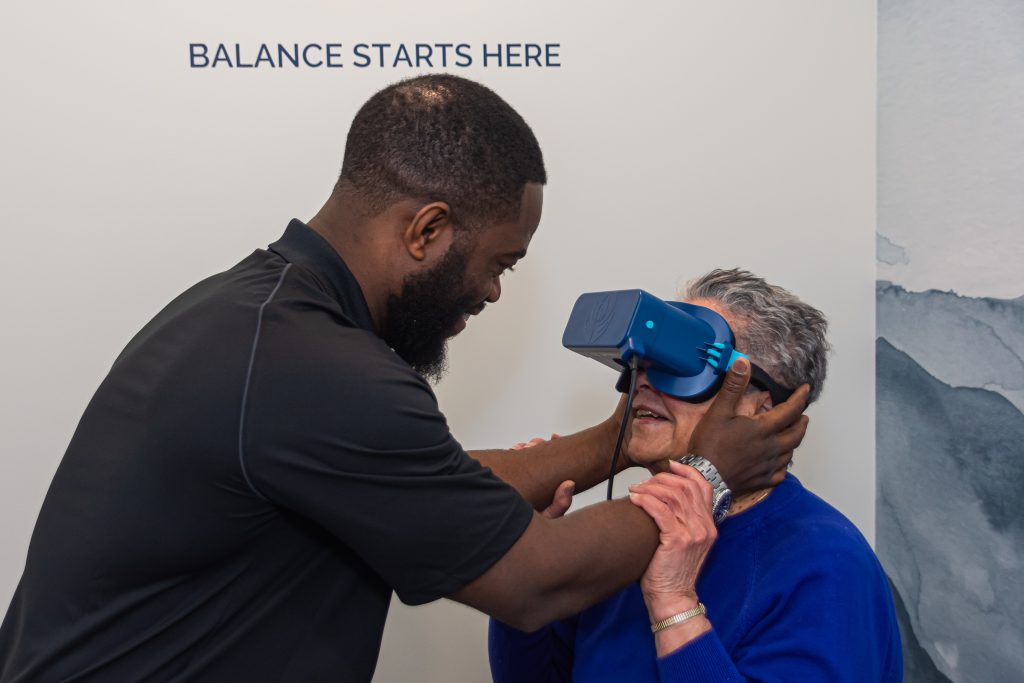
We explain what we find, whether vestibular physiotherapy is appropriate, and whether further medical assessment is recommended.
Vestibular care at Strong Body
Advanced training
Basit Adeyinka brings advanced vestibular education, including Duke/Emory training, alongside his background in concussion rehabilitation and musculoskeletal physiotherapy.
Care that follows the findings
Your treatment is chosen around your assessment, symptoms, and goals. Different causes of dizziness require different approaches.
A plan that fits your life
We guide you through treatment and, when appropriate, give you a manageable home program. You will understand what each exercise is for and how to work through it.
Progress we review together
We reassess relevant findings and everyday challenges so your plan can change as you progress.
What happens at your first visit?
1. Tell us what has been happening
We discuss your symptoms, health history, triggers, and how dizziness is affecting your life.
2. Work through the assessment together
We explain the tests before performing them and guide you through each step. Some tests may briefly bring on symptoms, and we adjust where needed.
3. Understand your next step
We discuss the findings and recommendations. When appropriate, treatment may begin during your first appointment.
You do not need to arrive with all the answers. Helping you make sense of your symptoms is part of our role.
Understanding vestibular conditions
BPPV
Brief episodes of spinning triggered by changes in head position, such as rolling over in bed or looking up, may be caused by BPPV. Assessment helps determine whether repositioning treatment is appropriate.
Vestibular hypofunction
This can happen with recovery after vestibular neuritis. Reduced vestibular function can affect balance and how clearly you see during head movement. Rehabilitation may include gaze stability, balance, and movement exercises.
Vestibular migraine
Dizziness, vertigo, and sensitivity to movement or busy environments can occur with vestibular migraine. Physiotherapy may support rehabilitation alongside medical management.
Persistent dizziness and visual motion sensitivity
Some people experience ongoing unsteadiness or discomfort in places such as grocery stores, crowds, or while using screens. Assessment helps guide an individualized approach.
Dizziness after concussion
Concussion can affect several systems involved in balance and movement. Assessment helps identify which areas may need rehabilitation.
Ménière’s disease
Ménière’s disease requires medical management. Vestibular physiotherapy may help address ongoing balance difficulties where appropriate.
Treatment built around what you need
Your plan may include:
Repositioning manoeuvres when BPPV is identified.
Exercises to improve gaze stability during head movement.
Gradual exposure to movements or environments that trigger symptoms.
Balance and walking exercises.
Treatment for relevant neck impairments.
Education and practical strategies for everyday activities.
The goal is to help you move toward the activities that matter to you, whether that means getting out of bed, shopping, working, or exercising with more confidence.
Questions about vestibular physiotherapy
Do I need a diagnosis before booking?
You do not need a confirmed vestibular diagnosis to contact us. We can assess your symptoms and recommend whether physiotherapy or further medical assessment is the appropriate next step.
Is all dizziness caused by the inner ear?
No. Dizziness can have several causes, including vestibular problems, migraine, medication effects, and other medical conditions. Assessment helps guide the appropriate care.
Will the assessment make me dizzy?
Some tests may temporarily bring on your symptoms. We explain what to expect and guide you through testing, with adjustments where needed.
Can BPPV be treated at the first appointment?
If testing identifies BPPV and treatment is appropriate, a repositioning manoeuvre may be performed at that visit. Some people need repeat treatment or follow-up assessment.
How many appointments will I need?
This depends on the findings, your goals, and your response to treatment. We discuss recommendations after your assessment and review them as you progress.
Should I arrange a ride for my first appointment?
Yes, we recommend having someone drive you to and from your first appointment, as testing or treatment may temporarily increase dizziness. If you need a ride, our team can help arrange a taxi through a local Sherwood Park taxi company we work with. Let us know when booking so we can help coordinate.
Will my insurance cover vestibular physiotherapy?
Vestibular physiotherapy is billed under your physiotherapy benefits and is often covered by extended health plans. Your coverage and reimbursement amount depend on your individual plan. We also offer direct billing to many insurers to make the process easier. If you’re unsure, our team can help you understand the billing process.
Are you able to direct bill my extended health provider?
Absolutely. We offer direct billing to most major insurance providers to make things simple and stress-free. We’ll help you with the process so you can focus on your recovery, not paperwork.
What should I book?
Choose a Vestibular Assessment when booking online. If you are unsure which appointment fits your symptoms, call 587-451-0608 and our team can help.
Take the next step toward feeling steadier
If dizziness is changing how you move through your day, start with an assessment.
We will listen, explain the findings, and help you understand the next step.
At Strong Body, vestibular rehab isn’t just about treating dizziness; it’s about restoring your confidence, rebuilding trust in your body, and helping you move forward on your limitless journey.
Open Hours
Monday: 8 AM – 7 PM
Tues – Thurs: 11 AM- 7 PM
Friday: 8 AM – 7 PM
Saturday: 10 AM – 2 PM
Sunday: Coming soon
Location
#180, 661 Wye Rd,
Sherwood Park, AB
T8B 0E4